

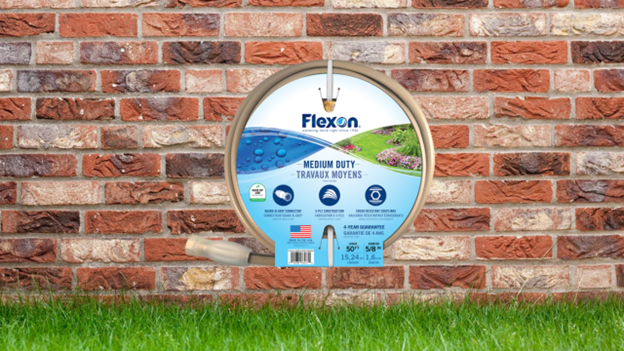
Most yard work is simple: water the beds, rinse tools, run a sprinkler for the lawn. You want a hose that moves easily, holds a steady pattern, and coils without a fight. A Medium Duty Garden Hose fits that daily routine. It balances strength with flex, handles regular use without feeling heavy, and lasts longer than lightweight lines that crimp or crack by midsummer.
Medium Duty Garden Hose: Built for Daily Use
A Medium Duty Garden Hose is made for the middle ground. Sturdier than light PVC but not as heavy as contractor rubber, it pairs a scuff resistant outer jacket with internal reinforcement that holds shape under typical home pressure. The result is a hose you can pull around planters and along flagstone, then coil quickly on a hanger without stiff loops or springy memory.
Construction That Survives the Season
Look for a jacket material that shrugs off abrasion from brick and gravel. A braided or spiral reinforcement layer prevents ballooning and helps the hose relax when a bend clears. Couplings matter just as much: metal ends with deep threads, a wide hex for grip, and a smooth swivel reduce cross threading and keep washers from shredding. These small choices separate a Medium Duty Garden Hose that behaves from one that needs constant tinkering.
Flexibility vs kink resistance
Too soft and the hose folds at the first sharp turn. Too stiff and it fights you on cool mornings. A good middle weight line bends into broad loops and springs open when you ease tension. Quick test in the yard: coil a two foot loop, pull it straight, and see if the jacket lays flat without a twist locked in. That behavior is what keeps water moving when you route around raised beds and patio furniture.
Length and diameter that match the job
Pick the shortest length that reliably reaches your farthest task. Many homes run two sections with quick connectors rather than one long coil. A 25 foot lead for planters by the patio, plus a second 25 foot section for the side yard, beats wrestling fifty feet every evening. Standard 5/8 inch inner diameter keeps flow strong for sprinklers and spray guns. If you hand water only, a 1/2 inch Medium Duty Garden Hose is lighter and still plenty for pots and borders.
Couplings, washers, and leak control
Most drips come from tired washers, not the hose body. Keep two spares taped to the spigot. Hand tighten until snug and stop; over tightening chews gaskets and makes the next change harder. A swivel at the female end lets you connect without twisting the entire line, which protects the hose and your wrists.
Storage that prevents the next kink
Hoses kink where they live. Use a wall hanger or open reel that lets you wind in wide loops. Avoid tight figure eights that lock twists. After watering, close the spigot, open the nozzle to bleed pressure, and coil while the line is relaxed. Dust and grit act like sandpaper, so give the jacket a quick rinse before storage if you dragged it through mulch or gravel.
Weather habits that extend life
Cold makes most jackets a little stiffer; heat softens them. On chilly mornings, unroll along the sunniest path and bring pressure up gradually so loops settle. In summer, do not leave any hose pressurized on hot pavement for hours. Crack the nozzle to vent when you set it down. These tiny habits keep couplings tight and the jacket in good shape.
Sprinklers, nozzles, and flow
Pair the hose with tools that match the work. A thumb control nozzle makes it easy to feather flow while you move between beds. For sprinklers, check that the spray head sits level and the pattern reaches edge to edge at your typical pressure. If you split lines for front and back yards, add an inline shutoff near the sprinkler so you can stop flow at the far end without hiking back to the spigot. The right accessories make a Medium Duty Garden Hose feel like a single well tuned system.
Maintenance you can do in minutes
- Swap a washer at the first sign of a drip.
- Rinse grit from the spray plate when a nozzle sputters.
- Keep couplings clean; a quick brush of threads prevents cross starts.
- Lay any flattened section in the sun for a few minutes, then coil in broad loops to reset memory.
Small habits keep the line cooperative month after month.
Common mistakes and simple fixes
- Storing under a weight that sets a permanent crease. Fix: hang coils wide and clear.
- Dragging across sharp corners. Fix: use a low cost hose guide at deck edges and masonry.
- Expecting the hose to feed a pressure washer or run oscillators all day. Fix: use a heavier feeder line for continuous duty and keep the Medium Duty Garden Hose for daily tasks.
- Leaving the line pressurized after shutoff. Fix: bleed pressure before you coil.
When to choose medium over light or heavy
Light hoses are great for balconies and quick pot watering but tend to flatten and kink under frequent use. Heavy commercial rubber is tough but overkill for many yards and tiring to haul. A Medium Duty Garden Hose sits between those extremes. It is the daily driver that stays flexible, holds a steady spray, and lasts through seasons of typical yard work without feeling like a workout.
Accessories that make life easier
Quick connectors let you snap between a shower nozzle and a jet without wearing threads. A short leader hose at a tight spigot acts like a pigtail and keeps the main line from bending sharply. A simple inline ball valve near the far end lets you shut flow while you move a sprinkler. None of these add much weight, and all of them reduce daily friction.
What you gain day to day
Faster setup. Fewer tangles. A coil that hangs neatly instead of fighting you next time. Most of all, consistent flow that makes watering predictable. When a hose matches your space and tasks, you use it more and worry about it less. For sizes, features, and availability, take a look at the Medium Duty FAW Series product page. It lays out the options so you can pick the Medium Duty Garden Hose that fits your yard and the way you actually work.