

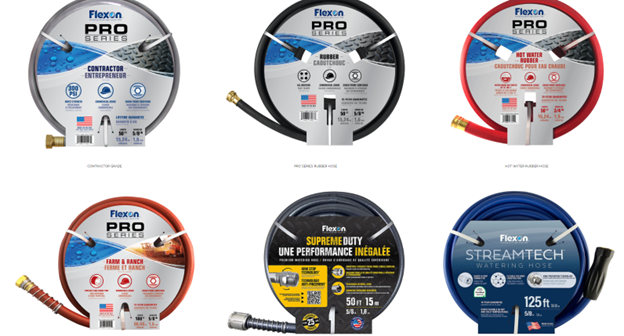
Crews and serious DIYers notice the small things. The coil that lays flat. The nozzle pattern that does not pulse. The coupling that seals the first time. A Professional Hose is built so those details add up. It stays flexible on cold starts, grips when wet, and holds a steady internal shape under pressure so your sprayers, foamers, and sprinklers behave the way they should. Less fiddling at the tap. More work done before lunch.
What a Professional Hose Must Deliver First
The baseline is simple: reliability under real use. A Professional Hose pairs a tough outer jacket with a reinforced wall that resists ballooning as pressure rises. That keeps the tube round, which preserves flow at the far end. The jacket slides over concrete and gravel without snagging. Threads start square, washers seat clean, and the swivel lets you tighten by hand without twisting the entire line. The payoff shows up at the nozzle in a cleaner fan and a crisper jet.
Reinforced construction without the rigid feel
Heavy hoses can fight you. Lightweight lines can fold at sharp turns. A well designed Professional Hose lands in the productive middle. Braided or spiral reinforcement supports the wall, but the jacket still bends into broad loops around planters and posts. If a fresh crease appears in the same spot after storage, set that section in the sun for a few minutes, straighten it, then hang the hose in wide coils. Memory resets quickly when loops are generous and the hose is not crushed under bins.
Couplings that seal even with wet hands
End fittings fail more hoses than jackets. Look for solid metal couplings with deep threads, a smooth female swivel, and a wide hex for tool grip when you need a gentle nudge. Start the threads square, hand tighten to snug, and stop. Keep two spare flat washers taped near the spigot. Most drips vanish with a fresh washer and a clean start. That small habit keeps a Professional Hose quiet at the connection points all season.
Cold mornings, hot afternoons, same handling
Stiff coils waste minutes at dawn; gummy jackets slip in midday heat. The jacket on a Professional Hose stays pliable in cool air and keeps texture when pavement bakes. Unroll in broad loops, bring pressure up slowly, and the line settles without a wrestling match. At shutdown, bleed pressure, wind wide, and hang it clear of traffic. Next use, it lays flat again. That steady feel is the quiet advantage you notice only when it is missing.
Flow and pressure that help tools work right
Thin walls flex under load and steal performance from attachments. With a stable wall, trigger sprayers, foam cannons, and sprinklers hold pattern instead of pulsing. You reach the corner stain with a jet, paint edges evenly with a fan, and keep oscillators lively at the far end of the lawn. If you split lines, add a Y at the source and a small shutoff near the work end so you can switch stations without hiking back to the faucet.
Pick length and diameter for the task, not the shelf
Sizing is where many setups go wrong.
- 25 feet for wash bays, patios, and tight side yards
- 50 feet for most driveways and garden zones
- 75 feet when the spigot sits far from the job
Standard 5/8 inch inner diameter balances volume and weight for most tools. For long uphill runs or two attachments at once, staying with 5/8 helps maintain pressure. When space is tight, two mid lengths joined by quick connectors beat one unwieldy coil.
Storage that prevents tomorrow’s kinks
Hoses kink where they live. Use a wall hanger or open reel that allows wide loops. Avoid tight figure eight wraps that lock twists into the jacket. After you close the valve, open the nozzle to bleed pressure, then coil while the line is relaxed. If you dragged across gravel or mulch, rinse the jacket so grit does not act like sandpaper next time you pull the line.
Short routines that extend service life
- Swap a washer at the first drip.
- Rinse grit from a sputtering spray plate and reattach.
- Add a hose guide at rough corners to prevent scuffing.
- If a tire flattens one section, warm it in the sun, round it by hand, then park that spot on a wide curve at the hanger.
Small steps, longer service life for your Professional Hose.
Common mistakes and clean fixes
- Overspray on walks: turn the valve down until the fan stops at the bed edge or angle the head slightly inward.
- Weak reach at the far end: shorten the run or feed from the middle with a tee.
- New kink after coil up: widen loops and keep weight off the coil.
- Drip at the faucet: replace the washer and reseat the swivel squarely before snugging by hand.
- Pulsing nozzle: check for a half closed splitter or grit in the spray plate.
Accessories that shave minutes off every job
Quick connectors let you swap from a shower head to a jet without chewing threads. A short leader hose at a cramped faucet acts like a pigtail and prevents sharp bends in the main line. An inline ball valve near the work end lets you stop flow where you stand. A pressure regulator helps if the site PSI runs high. None add much weight; all remove small frictions that slow the routine.
Where a professional build actually pays off
Equipment washdowns, kennel and patio cleanup, long sprinkler stretches, vehicle salt rinses, seasonal cleanups on rough ground. In each case, a Professional Hose keeps pressure steady and resists abrasion that sends light garden lines to the trash. The win is not flashy. It is jobs that finish on schedule and gear that still behaves in month ten.
Ready for a hose that behaves every time
Set your storage, keep spare washers, and add quick connections once. From there, the hose fades into the background so you can focus on the task. For sizes, materials, and compatible accessories laid out together, review the Professional Hose lineup. It shows how to choose the build that fits the way you actually work.